 Jessica Rydgren
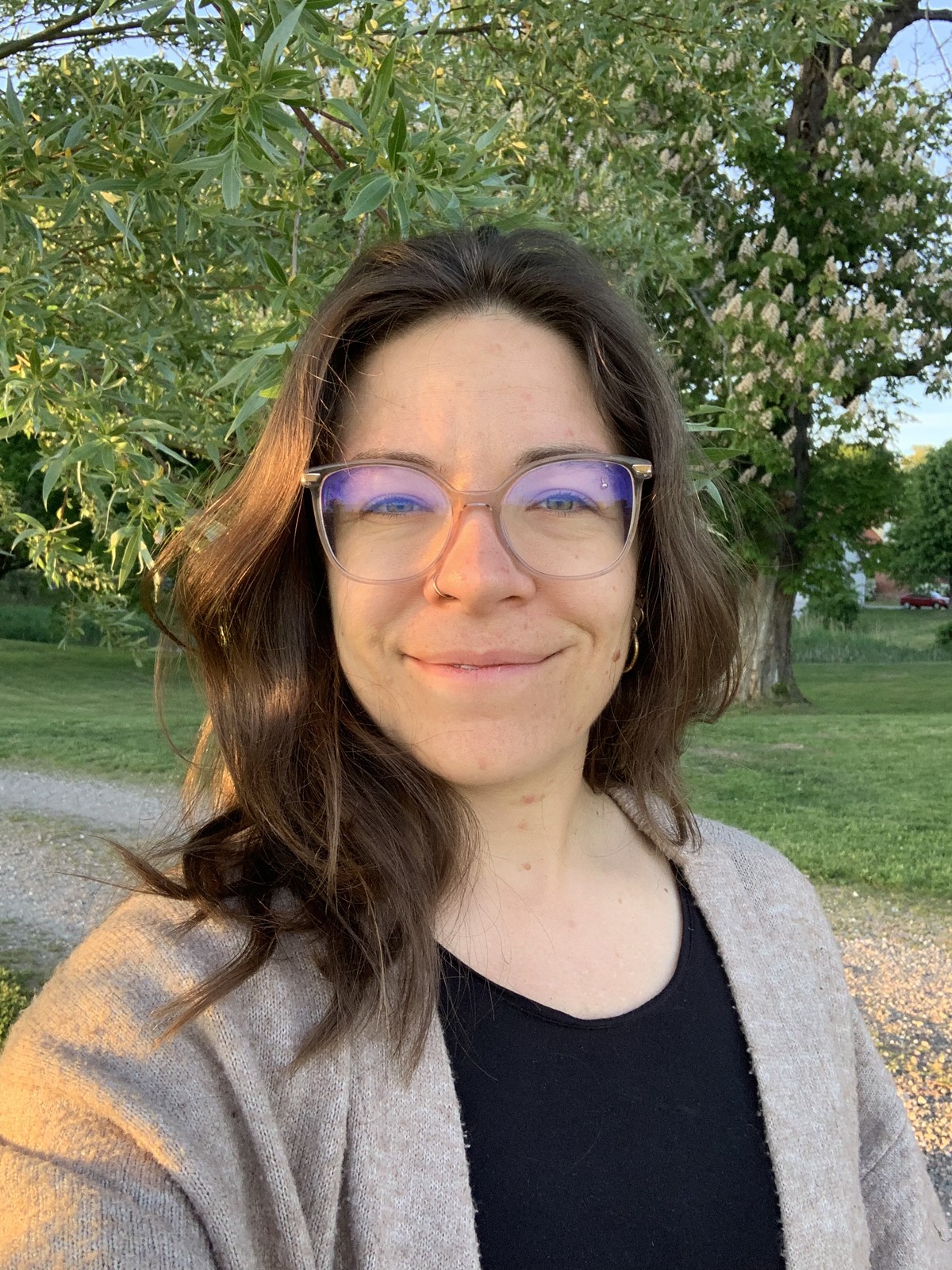
For some it's constant — stress, anxiety, low mood, or a sense of being stuck. For others it's more a longing to feel better, live more in line with themselves, or access more of their potential. Wherever you are, I meet you there, and we start from what's true for you right now.
Sometimes you know exactly what you need help with. Sometimes there's just a vague sense that something needs to change. Together we explore what's happening in your thoughts, feelings, relationships, and body — and what's actually helpful for moving forward, without forcing solutions too soon.
As a person, I'm curious, grounded, and relationship-oriented. I feel best when there's movement, creativity, and meaningful connection in my life, and that shapes how I work too. For me, health isn't just about understanding yourself — it's about being in contact with your body, with others, and with what feels alive.
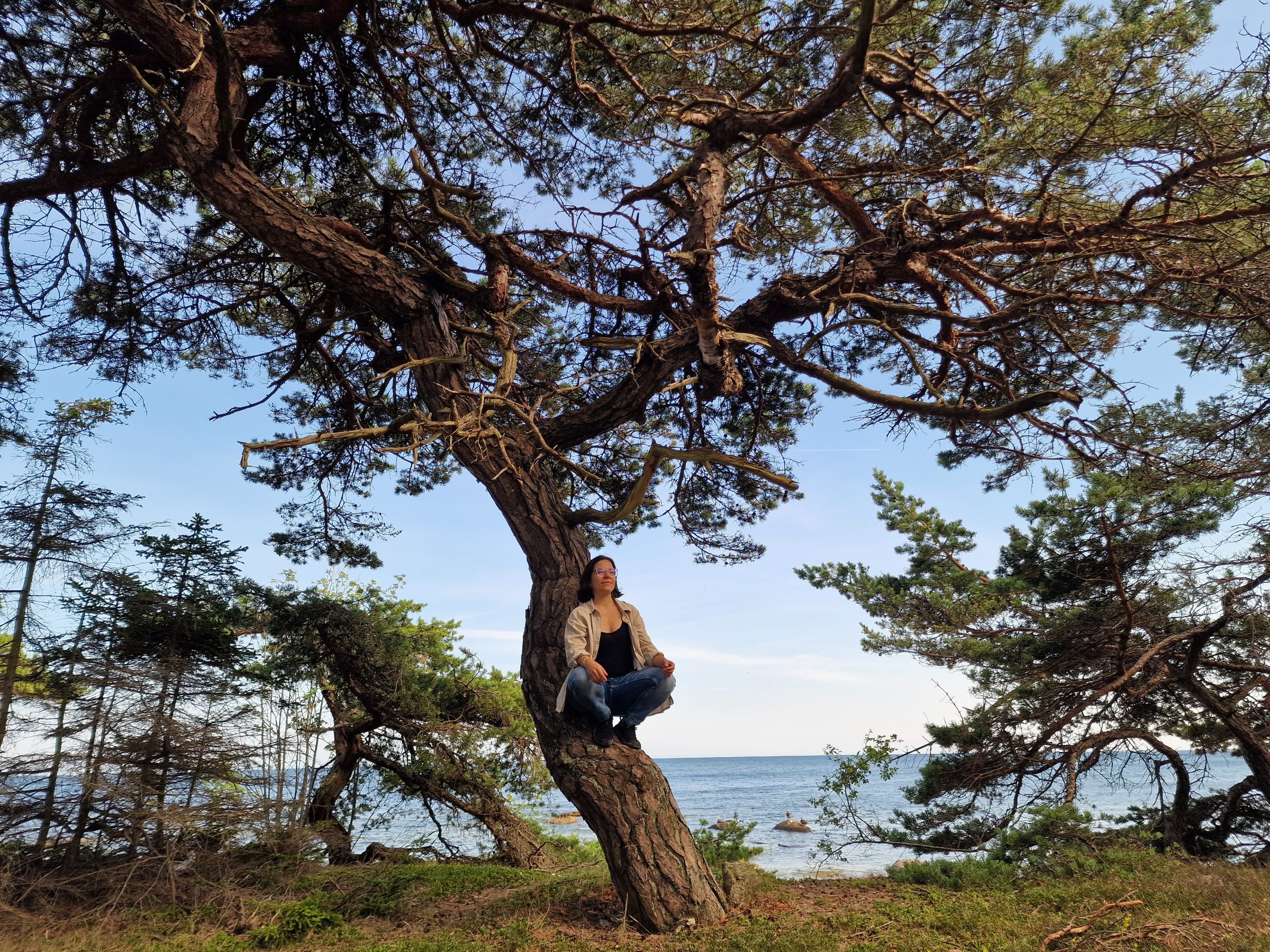
Outside of work I climb, walk in the forest, snowboard, and work with ceramics and throwing pottery. Using my body, working with my hands, and being in nature are important ways for me to land, regulate, and recharge. I also value time with the people close to me, with room for both play and presence.
[Jessica — add a line here about your expat background/international perspective, so I can weave it in naturally rather than guessing at the details.]
Safety is the foundation of everything I do. For change to become possible, the nervous system needs to feel safe enough — so I always work at the pace of the body, with a focus on regulation, stabilization, and building the capacity to meet what's difficult without becoming overwhelmed.
I work exploratively and at depth, always with respect for your pace and your boundaries. In the therapeutic relationship, I bring presence, structure, knowledge, and reflection. I see myself as a guide and a fellow traveler — you already carry what's needed for change, and my work is to help you connect with it and create the conditions to use it in your life.
My approach is holistic and integrative. I work from a base of CBT (Cognitive Behavioral Therapy) and PDT (Psychodynamic Therapy), have further training in ISTDP (Intensive Short-Term Dynamic Psychotherapy), and also draw on ACT (Acceptance and Commitment Therapy), CFT (Compassion Focused Therapy), and Parts Work inspired by IFS (Internal Family Systems). I use these methods flexibly, adapting them to you, with a focus on underlying patterns and mechanisms rather than isolated symptoms.
I have particular experience working with life crises, stress, grief, burnout, anxiety, low mood, identity, LGBTQIA+ experience, and non-monogamous relationship structures. My aim is to support your health through sustainability, awareness, and room to act. I also have experience supporting the integration of non-ordinary states of consciousness — including psychedelic experiences, meditation, and spiritual experiences — always with a focus on safety, nervous-system capacity, and long-term stability.
My vision
How do we create a society where people don't have to choose between belonging and living in contact with themselves?
How do we help people live more in contact with themselves, while also changing the structures that make it so difficult? I believe both perspectives are needed. People need to take responsibility for their own healing, while we also need to build societies, workplaces, and healthcare systems that make it easier to live healthy lives. We can't understand people's suffering without also understanding the environment they live in.
Within psychology, it's easy to end up with an overly individualistic perspective. And if we're also moving in self-development circles with an ideal of being able to handle anything on the outside without it touching us on the inside, it's easy to start meeting ourselves with self-criticism and shame when we're not doing well.
At the same time, we risk forgetting how much our life circumstances actually shape us. Sometimes the path to feeling better isn't just about inner change, but just as much about changing the outer — our relationships, our work environment, our living conditions, or the systems we're part of. Sometimes the most healing change isn't an inner one, but an outer one. And most often, we need both.
My vision is to contribute to a society where people live more in contact — with themselves, with others, and with nature. By helping people shed the obstacles that exist both within us and in society, I want to make a deeper contact possible.
What does it mean to live in contact? What happens when you feel at home in yourself? Maybe feelings can storm without you losing your footing. Maybe you can meet another person with full presence, without simultaneously planning what to say next. Maybe the body feels a little softer. There's more playfulness. More freedom. Less struggle. I believe humans are meant to live in deep contact.
I'm curious about which environments help us come more into contact — with ourselves, with each other, and with nature. And which environments, often quite unconsciously, make that contact harder.
What happens to our capacity to feel contact as the pace keeps increasing? We're fed more information than any generation before us. Algorithms compete for our attention. Many of us have learned that our worth is tied to performance, productivity, or how others perceive us. At the same time, more and more people report feeling lonely, stressed, or disconnected — despite never having been more connected.
I want to contribute to a more sustainable society. Where sustainability isn't just about reduced emissions in nature, but also about people. Where we build lives, relationships, workplaces, and healthcare systems that make it possible to feel well without having to compromise on who we are. I believe mental health needs to be understood from a more holistic perspective — where the individual and the environment work together, and where differences can become assets rather than problems to be fixed.
I want to guide people to shed what keeps them from living authentically, to help them come home to themselves, and to develop a deeper contact with their own inner strength. I want to create spaces where people can meet more authentically, with healing and with power. I want to gather people from different professions around a more holistic view of health, and together explore how we can create more sustainable ways to live, work, and take care of each other.
I don't have all the answers. This is an exploration. A direction. A vision that will keep evolving. If these questions stir something in you, I hope you'll want to be part of the conversation — maybe through therapy, maybe through a future network, maybe through workshops or courses. Because I don't believe any of us creates this change alone. I believe we do it together.